
Millions of Americans are living with insulin resistance—and most have no idea.
Insulin is a hormone produced by your pancreas that helps move sugar (glucose) from your bloodstream into your body’s cells, where it is used for energy. When your cells become less responsive to insulin, your body must produce more and more insulin just to keep your blood sugar within a normal range.
This condition is called insulin resistance.
The problem is that insulin resistance can exist for years—even decades—before blood sugar becomes elevated enough to be diagnosed as prediabetes or Type 2 diabetes. During this time, the body is often experiencing chronic inflammation, metabolic dysfunction, and damage that may contribute to the development of numerous chronic diseases.


Many patients are surprised to learn they have insulin resistance because it is not routinely screened for during most annual physicals.
Standard blood sugar tests such as fasting glucose or even A1C may remain normal while insulin levels are already significantly elevated. Unless your healthcare provider specifically evaluates metabolic health using additional laboratory testing and clinical assessment, insulin resistance can go undetected.
At Metabolic Centers for Excellence (MCE), we focus on identifying the underlying metabolic dysfunction—not simply treating high blood sugar after diabetes develops.
Our goal is to identify insulin resistance as early as possible, when meaningful improvements are often achievable.
Insulin resistance is widely recognized as a major contributor to metabolic disease and is associated with an increased risk of developing numerous chronic health conditions.
These include:
While insulin resistance does not directly cause every condition listed above, it is an important metabolic factor that can contribute to their development or progression.
Many people experience symptoms long before they are diagnosed. Common signs include:
You do not need to have all of these symptoms to have insulin resistance.

At Metabolic Centers for Excellence, we believe healthcare should focus on identifying and treating the root cause—not simply managing symptoms.
Every patient is unique, so every treatment plan is personalized. Depending on your health needs, your individualized program may include:
Medical provider evaluation
Nutrition/Lifestyle coaching
Anti-inflammatory meal planning
Exercise and movement recommendations
Weight management strategies
Medication optimization when appropriate
Continuous glucose monitoring
Advanced metabolic therapies
Ongoing laboratory monitoring
Long-term maintenance and prevention planning
Our objective is to improve insulin sensitivity, reduce inflammation, support healthy metabolism, and lower the risk of future chronic disease. Many patients experience significant improvements in metabolic health through a comprehensive treatment program, although individual results vary.
The earlier insulin resistance is identified, the greater the opportunity to improve metabolic health before complications develop.
By addressing insulin resistance early, many patients can:
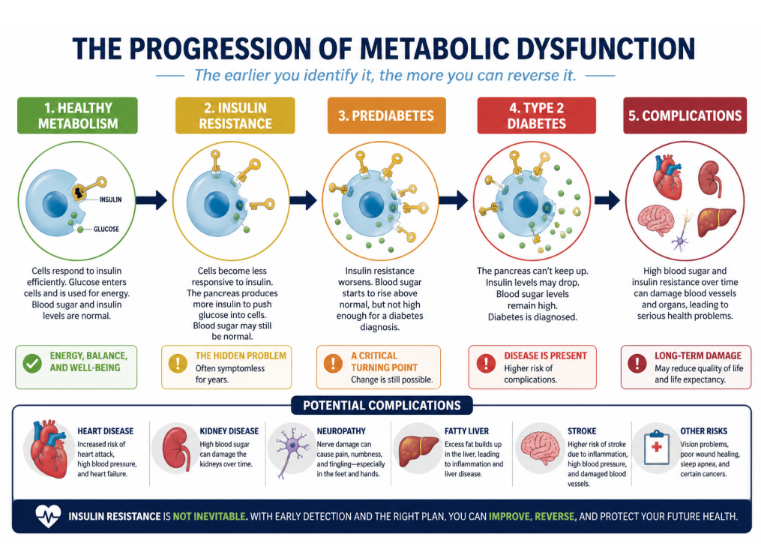
If you’ve been told that your lab work is “normal” but you still struggle with fatigue, weight gain, inflammation, or other unexplained symptoms, insulin resistance may be an important piece of the puzzle.
At Metabolic Centers for Excellence, we specialize in identifying the underlying causes of metabolic dysfunction and creating individualized treatment plans designed to help you achieve lasting improvements in your health.
Metabolic syndrome can affect people of different ages and body types. Although excess abdominal weight is a common risk factor, a person does not have to appear significantly overweight to have insulin resistance or poor metabolic health. (CDC)
Risk may be higher among people with:
Women with PCOS frequently have insulin resistance, which increases their risk of developing type 2 diabetes and related metabolic conditions. (CDC)
Metabolic syndrome is not diagnosed by one test alone.
A healthcare provider may evaluate:
Additional testing may be appropriate depending on the patient’s symptoms and medical history.
This may include:
Standard diagnostic evaluation includes measuring blood pressure and obtaining blood tests for glucose, cholesterol, and triglyceride levels. (NHLBI, NIH)
There is no single medication that treats every part of metabolic syndrome. Treatment typically focuses on improving lifestyle habits and addressing each individual risk factor.
Heart-healthy lifestyle changes are considered the first line of treatment. Medication or, in some cases, metabolic surgery may be considered when lifestyle intervention alone is not sufficient. (NHLBI, NIH)
Typically, treatment targets these areas:
Each component of metabolic syndrome carries its own health risks. When several occur together, they may reinforce one another and increase the likelihood of chronic disease.
Untreated metabolic syndrome may contribute to:
Type 2 Diabetes
Heart Disease and Stroke
Fatty Liver Disease
Kidney Disease
Neuropathy and Circulation Problems
Chronic Inflammation
This information is intended for general educational purposes and is not a substitute for individualized medical advice, diagnosis, or treatment. MIT is a medically supervised treatment available only to appropriately selected patients following a clinical evaluation. Treatment outcomes vary. Patients should not stop or change diabetes medication, insulin, or other prescribed treatments without direction from the prescribing healthcare provider.