
Prediabetes means your blood sugar is higher than normal but has not yet reached the level used to diagnose type 2 diabetes. It often develops when the body becomes resistant to insulin—the hormone that helps move glucose from the bloodstream into the cells for energy.
Without intervention, prediabetes can progress to type 2 diabetes and increase the risk of heart disease and stroke. However, progression is not inevitable. Early testing, lifestyle changes, medical treatment, and ongoing monitoring may help improve blood sugar control and delay or prevent type 2 diabetes. (NIDDK)

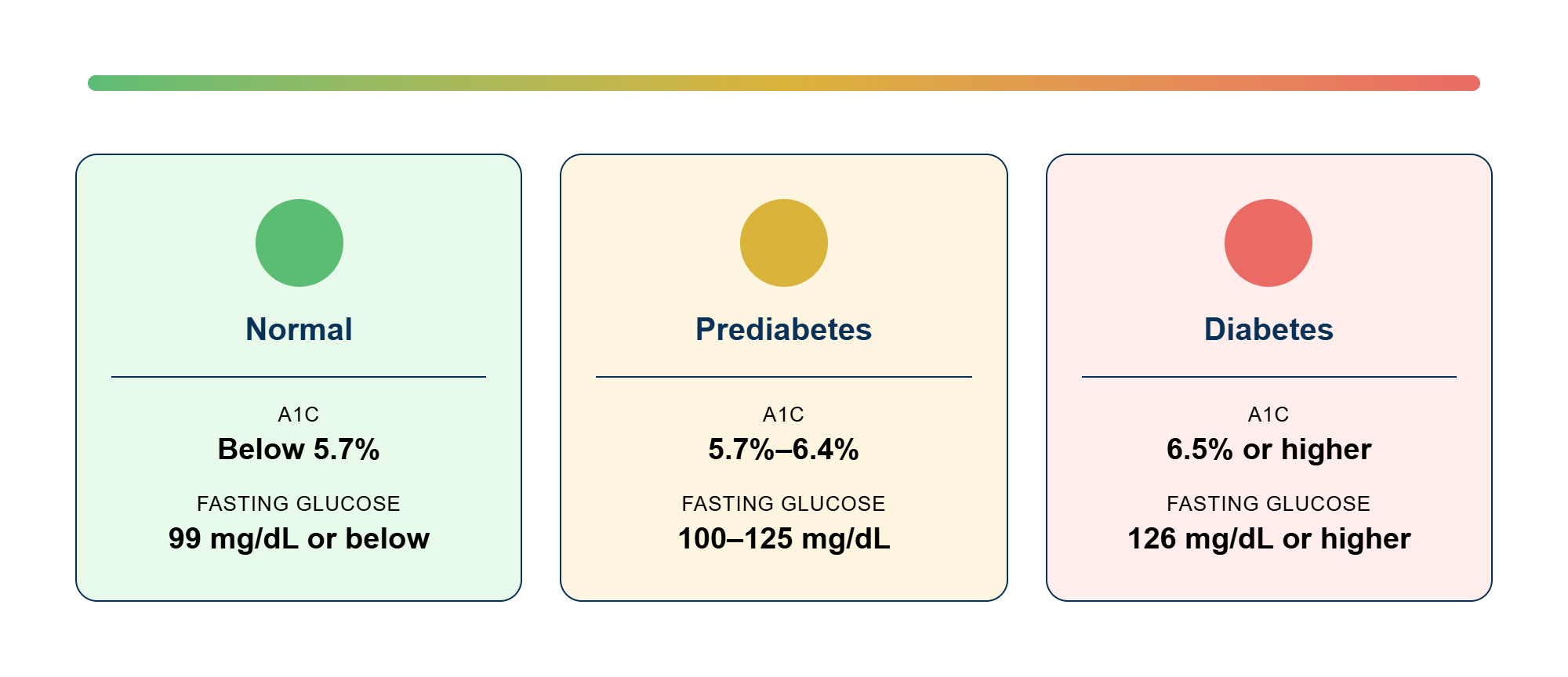
The primary difference is how high blood sugar levels have become.
An A1C test estimates your average blood sugar over approximately two to three months. A fasting glucose test measures your blood sugar after an overnight fast. A healthcare provider may repeat testing or use an oral glucose tolerance test before confirming a diagnosis. (CDC)

With prediabetes, the body may still produce insulin, but the cells are not responding to it efficiently. The pancreas often compensates by producing more insulin to keep blood sugar from rising further.

Type 2 diabetes develops when insulin resistance becomes more advanced and the pancreas can no longer produce enough insulin. Persistent high blood sugar can gradually damage the nerves, kidneys, eyes, heart, and blood vessels. (NIDDK)
Yes. Prediabetes frequently causes no obvious symptoms. Many people discover it only after routine laboratory testing or after being evaluated for another health concern. (CDC)
Possible warning signs of insulin resistance or worsening blood sugar regulation may include:
These symptoms can have many causes and do not confirm prediabetes. Blood testing is necessary for diagnosis.
As blood sugar rises into the diabetes range, symptoms may become more noticeable. They can include:
Type 2 diabetes can still develop gradually with mild or no noticeable symptoms, which is why screening is important. (NIDDK)
Prediabetes treatment typically begins with an individualized plan to improve insulin sensitivity and reduce the body’s demand for insulin.
A balanced eating plan may emphasize:
Regular movement helps the muscles use glucose and can improve insulin sensitivity. A treatment plan may include walking, resistance training, flexibility work, or other activities suited to the patient’s health and mobility.
For patients who are overweight, even moderate weight loss may meaningfully improve insulin sensitivity and reduce the risk of progressing to type 2 diabetes. Lifestyle intervention remains a cornerstone of prediabetes management. (NIDDK)
Some patients may be prescribed medication—commonly metformin—when their risk of developing type 2 diabetes is especially high. Other medications may be considered when weight management, cardiovascular risk, or additional metabolic conditions need to be addressed.
Medication decisions should always be based on the patient’s complete medical history, laboratory results, current prescriptions, and individual risk factors.
Prediabetes should not be treated as a one-time abnormal test. Follow-up may include:
Many people are told that their blood sugar is “a little high” and advised to eat better and return for testing later. Although lifestyle changes are essential, some patients need more structure, closer monitoring, and a more personalized metabolic treatment plan. At Metabolic Centers for Excellence, we look beyond a single glucose result. Our team evaluates the broader metabolic picture, which may include:
-Blood sugar patterns
-A1C
-Evidence of insulin resistance
-Current medications
-Weight and body composition
-Nutrition habits
-Cardiovascular risk factors
-Neuropathy symptoms
-Other diabetes-related
complications
The goal is to identify metabolic dysfunction early and create a plan that addresses the factors contributing to poor blood sugar regulation.

MCE offers a medically supervised metabolic infusion therapy, or MIT, for appropriately selected patients. MIT uses carefully controlled, small-dose insulin/saline blend administration combined with glucose monitoring and individualized clinical oversight. The purpose is to support the body’s ability to use glucose more effectively while the patient also participates in a broader metabolic care plan.
MIT is not automatically recommended for every person with prediabetes. Eligibility depends on the patient’s diagnosis, laboratory findings, health history, current medications, and provider assessment.
Traditional care may focus primarily on lowering an A1C or fasting glucose result.
At MCE, we focus on understanding why the number is elevated and what can be done to improve the patient’s overall metabolic health.

Better understand their blood sugar patterns
Identify insulin resistance earlier
Improve daily nutrition and activity habits
Address contributing metabolic risk factors
Monitor progress through objective testing
Reduce the risk of worsening blood sugar control
Work toward healthier, more stable glucose levels
Prediabetes is an opportunity to take action before blood sugar becomes more difficult to manage.
If you have been told that your A1C or fasting glucose is elevated—or if you have risk factors for insulin resistance—MCE can provide a comprehensive evaluation and explain which treatment options may be appropriate for you.
Metabolic syndrome can affect people of different ages and body types. Although excess abdominal weight is a common risk factor, a person does not have to appear significantly overweight to have insulin resistance or poor metabolic health. (CDC)
Risk may be higher among people with:
Women with PCOS frequently have insulin resistance, which increases their risk of developing type 2 diabetes and related metabolic conditions. (CDC)
Metabolic syndrome is not diagnosed by one test alone.
A healthcare provider may evaluate:
Additional testing may be appropriate depending on the patient’s symptoms and medical history.
This may include:
Standard diagnostic evaluation includes measuring blood pressure and obtaining blood tests for glucose, cholesterol, and triglyceride levels. (NHLBI, NIH)
There is no single medication that treats every part of metabolic syndrome. Treatment typically focuses on improving lifestyle habits and addressing each individual risk factor.
Heart-healthy lifestyle changes are considered the first line of treatment. Medication or, in some cases, metabolic surgery may be considered when lifestyle intervention alone is not sufficient. (NHLBI, NIH)
Typically, treatment targets these areas:
Each component of metabolic syndrome carries its own health risks. When several occur together, they may reinforce one another and increase the likelihood of chronic disease.
Untreated metabolic syndrome may contribute to:
Type 2 Diabetes
Heart Disease and Stroke
Fatty Liver Disease
Kidney Disease
Neuropathy and Circulation Problems
Chronic Inflammation
This information is intended for general educational purposes and is not a substitute for individualized medical advice, diagnosis, or treatment. MIT is a medically supervised treatment available only to appropriately selected patients following a clinical evaluation. Treatment outcomes vary. Patients should not stop or change diabetes medication, insulin, or other prescribed treatments without direction from the prescribing healthcare provider.